• Follow Us On :

Study Dental PG in Germany

Start your journey towards an international dental career in Germany with expert guidance.

🇩🇪 Germany Medical Education

Your Future as a Doctor Starts in Germany

Affordable medical education, international exposure and excellent career opportunities.

  • ✔ No Tuition Fees in Public Universities
  • ✔ World Recognized Medical Training
  • ✔ High Doctor Salary Opportunities
  • ✔ Complete Admission Guidance
GERMANY DENTAL PG ADMISSIONS

Build Your Dental Career In Germany with World-Class PG Training

Achieve your dream of pursuing a Dental PG career in Germany through structured guidance, German language training, licensing support, and clinical placement assistance. Begin your journey toward an internationally recognized dental profession with expert mentorship at every step.

Start Your Dental PG Journey

Fill out the form below, and our expert counsellors will contact you to discuss eligibility, German language training, licensing requirements, and the complete pathway to postgraduate dental education and career opportunities in Germany.

Medical PG in Germany
Dental PG in Germany

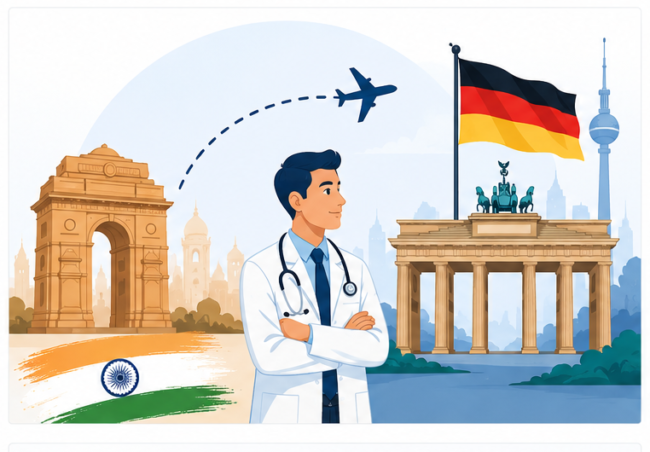
Dental PG In Germany After BDS/MDS For Indian Dentists

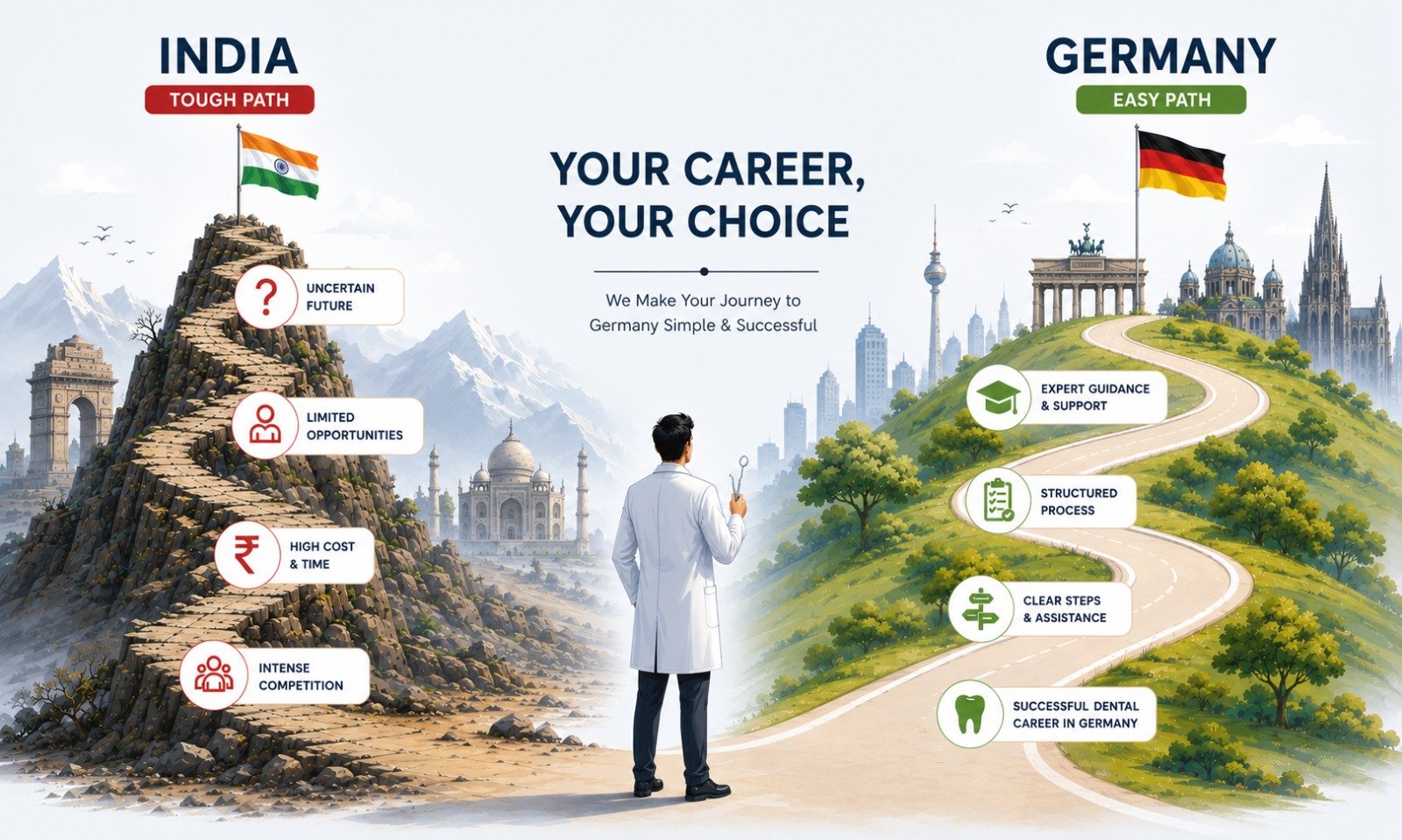
Your Career, Your Choice.

Empower Your Future : Study Dental PG in Germany after BDS/MDS in India with Confidence!

Don't Let One Exam Decide Your Career

Pursue your Dental PG in Germany with internationally recognized qualifications, expert guidance, and excellent career opportunities.

Why Dental PG in Germany is Such a Unique System?

When you decide to be a specialist in Germany as a Dental practitioner from India, you get rid of all the challenges faced by dentists in India. Pursuing your PG in Germany after BDS in India is
  • Without any subject based competitive clinical MCQ based exams
  • Without compromising on your choice of specialization
  • Guarantee of settlement with a handsome salary even before specialization
The uniqueness of the system allows you to work in a clinic as a fully-paid dentist while pursuing a dental PG in Germany, and the specialist degree is nothing but a by-product of your employment as a dentist in Germany.

WORK – LEARN – EARN

We are a one-stop destination for dental practitioners who are looking for employment in Germany through Approbation so that they can accomplish their academic and professional dreams in Germany. We extend a helping hand through a cost effective, all-inclusive range of integrated service for Dentist from India serving as a trusted Germany consultancy in Hyderabad, India.
MissionGermany

Still Preparing for NEET MDS?
Discover a Smarter Path to Dental PG in Germany

Thousands of aspiring dentists spend years preparing for NEET MDS with limited seats and intense competition. Germany offers an internationally respected Dental PG pathway with advanced clinical exposure, modern hospitals, and excellent career opportunities.

Medical Doctors
Germany Dental Pathway

Become a Licensed Dentist
in Germany

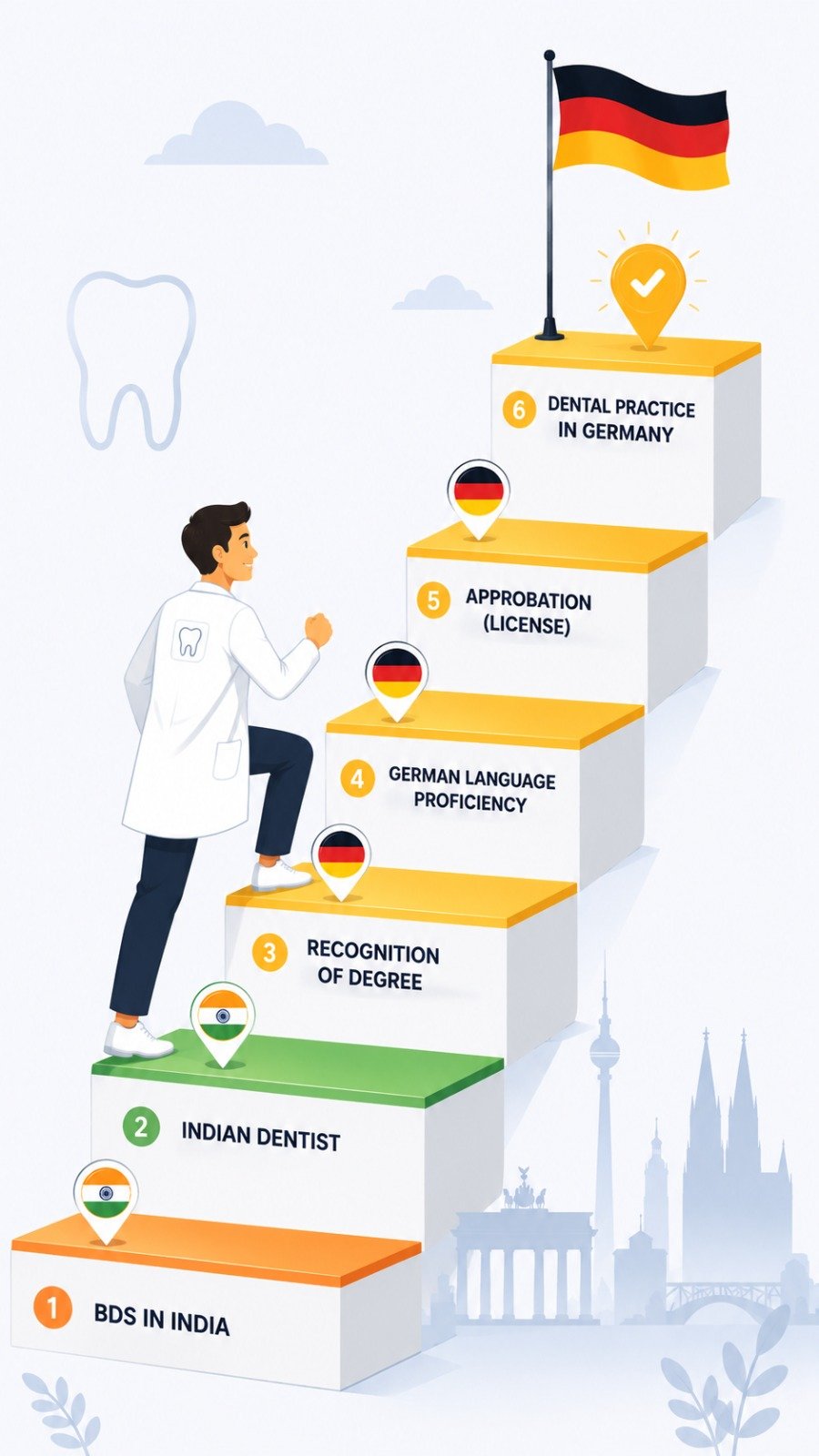
Recognition Language FSP KP Approbation
Dental Recognition Process

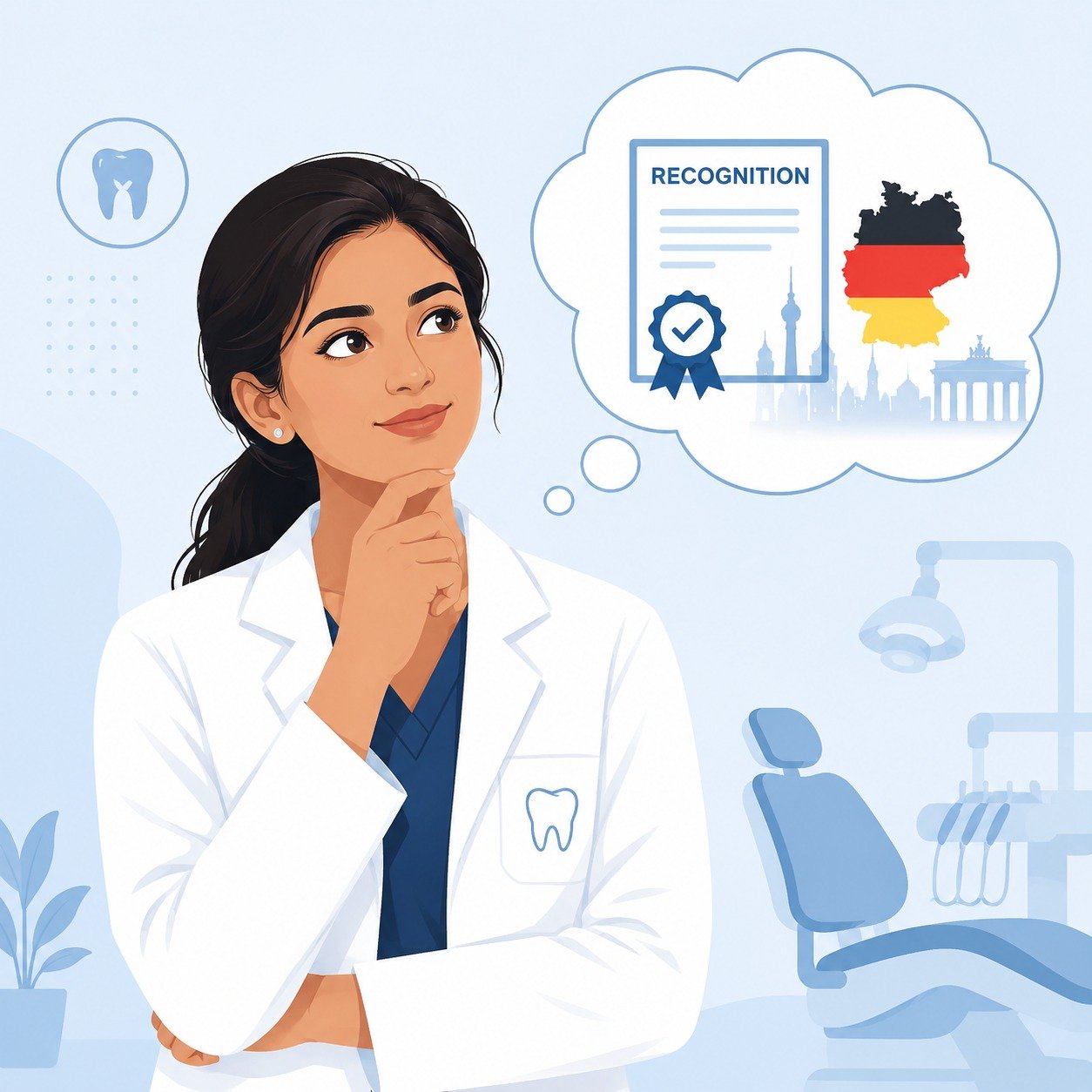
Is An Indian (Or Other Non-Eu) Dental Degree Valid in Germany?

A non-EU dental degree, including an Indian BDS, is not automatically valid in Germany, but it can be recognised. The authority compares your training to the German curriculum; if it is equivalent, you proceed directly, and if not, you take the Kenntnisprüfung(KP) to prove equivalent knowledge. In both cases you also need German language proof and the Fachsprachprüfung before the Approbation is granted.

Recognition of Degree

Recognition of an BDS/MDS degree in Germany means that the German medical licensing authority evaluates your dental qualification to determine whether it is equivalent to a German dental degree. This process is called Anerkennung (recognition). It is a mandatory step before you can obtain a German dental license (Approbation) and work as a dentist in Germany. An Indian BDS/MDS is not automatically recognized as equivalent in Germany. Most Indian graduates go through the recognition process and may need to pass the Kenntnisprüfung before receiving full Approbation, depending on the evaluation by the state authority.

German Language
German Language

The exact language requirements can vary slightly by Bundesland (German state), but B2 General German + C1 Dental German (FSP) is the standard pathway across Germany.

Fachsprachprüfung (FSP)

Fachsprachprüfung (FSP) is the Dental Language Examination required for foreign-trained dentist who want to obtain a dental license (Berufserlaubnis) in Germany. The FSP is not a dental knowledge exam. It focuses on your ability to use German in real clinical situations.

Approbation (KP)
Kenntnisprüfung (KP)

The Kenntnisprüfung (KP) is the dental knowledge examination that many non-EU dentists must pass to obtain Approbation (full dental license) in Germany when their qualification is not considered equivalent to the German degree. The KP verifies that your clinical knowledge and practical skills meet the same standard as a graduate trained in Germany.

Your path to become a Dental Specialist

Dental Postgraduate Training In Germany (Zahnarzt Weiterbildung)

If you hold a foreign professional qualification as a dentist and wish to work in that profession in Germany, you need official, state-issued accreditation, the so-called "approbation.

The approbation is mandatory should you wish to practice as a dentist or intend to open up your own practice.

Indian dentists who wish to work in Germany must understand that the German dental system is different from the MDS structure in India. Instead of fixed postgraduate branches, Germany follows a license-based and practice-oriented system.

Germany offers:

  • Structured dental practice after getting Approbation (license to practice)
  • Clinical experience in hospitals and private clinics
  • University-based postgraduate programs such as Master of Science (M.Sc.) in Dentistry
  • Training pathways in selected specialist areas like orthodontics or oral surgery

So, while the structure is different, Indian dentists can still build a strong specialization pathway in Germany through clinical work and academic qualifications.

Dental PG in Germany paves the pathway for specialization that can last three to four years for dentists depending on the specialty. The good news is that it is a remuneration-based on-the-job training very much like the residency program for doctors. You work as a registered dentist with a salary before starting your Dental PG in Germany giving a dentist the assurance of settlement with a handsome payout.

And all this without any competitive MCQ-based clinical exams and no compromise on your choice of specialization.

You get what you want - So what else do you want?

The program is a paid, on-the-job training, similar to a residency, allowing dentists to earn while specializing.

Work as a registered dentist with a salary before specialization, ensuring financial security and long-term settlement opportunities.

Achieve your preferred specialization without competitive MCQ-based clinical entrance exams and continue your career with confidence.

Career of Indian Dentists in Germany

Why Dental Pg In Germany Is An Achievable Option For Indian Dentists?

Medical PG Germany
STEP

01

01

Dental Specialization Journey

India vs Germany

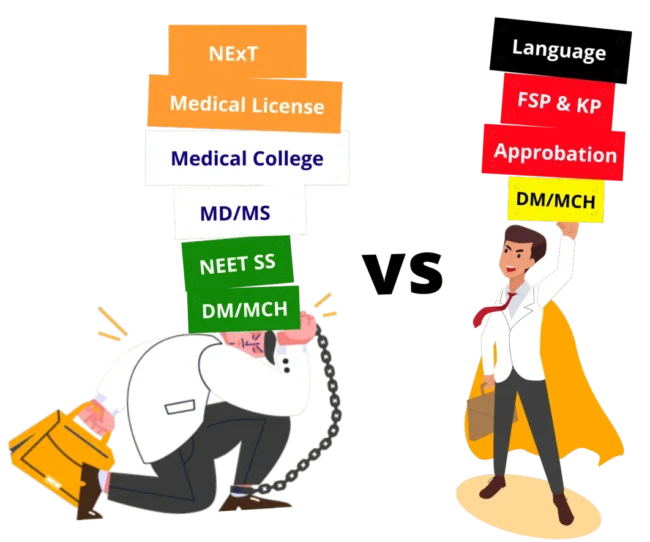
The prerequisites of becoming a specialist dentist in India is not just expensive but ungratifying with the odds of succeeding are particularly scarce. This is why many opt for PG in Germany after BDS in India, as the systems in India and Germany are poles apart.

In India, you earn your Dental license after completing your dental studies with a compulsory internship. This does not necessarily assure you a seat for dental specialization. You must go through very competitive MCQ-based exams of NEET-MDS to be a specialist in India. Only the top few percentiles of the aspirants get to become a specialist in India.

India
  • Competitive Entrance
  • Limited Seats
  • High Competition
Germany
  • Career Opportunity
  • Structured Pathway
  • Residency Training
02

German Dental Licensing Pathway

Your Route to Dental Specialization

Unlike India, dentists in Germany are entitled to start their specialization with no competitive MCQ-based subject exams like NEET MDS in India but can directly start specialization after getting Permanent Medical Licensing called “Approbation”. The only prerequisite is getting a temporary license (Berufserlaubnis). This is acquired by qualifying the German language and Dental German language examinations Fachsprachprüfung – FSP. After passing Fachsprachprüfung – FSP the dentist can apply for a knowledge test- Kenntnisprüfung (KP), and after passing Kenntnisprüfung (KP) the dentist gets permanent license (Approbation), to begin a fully-paid specialization training of his choice.

01
German Language
02
FSP
03
KP
04
Approbation
Germany Medical Licensing
STEP

02

German Language Journey
STEP

03

03

German Language & Dental Licensing Journey

From B1 German to Approbation

The journey for Dental PG in Germany for Indian dental practitioners can begin with mastering the basic and intermediate level of German Language to the level of B1 in India followed by advanced level of German Language B2- C1 in Germany continued with C1 -Medizin Kurs. Once you clear the verbal qualifying assessment exams of Fachsprachenprüfung (FSP), you begin working on a temporary license with a salary. After qualifying Kenntnisprüfung (KP), you are granted a permanent dental license called Approbation so that you start your specialization— as a dental practitioner in Germany.

B1
India
B2
Germany
C1
Medizin
FSP
Exam
KP
Exam
Approbation
04

MissionGermany Dental PG Support

Complete Guidance from India to Germany

MissionGermany, The Education Network thoroughly evaluates your academic records and handles the complete documentation process to support your application for dental licensing in Germany, setting you on a direct path to dental post-graduation in Germany.

After receiving the necessary approvals (Defizitbescheid/Anhörung) from a specific State Medical Council, you travel to Germany to continue your advanced German language training and prepare for the dental German language courses, which are vital for Dental PG in Germany after BDS in India.

Mission Germany Support
STEP

04

Requirements To Start Dental Residency In Germany (Zahnarzt Weiterbildung)

Indian dentists generally need :

The duration required for different levels of learning:

Mission Germany

  • A18 Weeks
  • A28 Weeks
  • B112 Weeks
  • B2.1, B2.216 Weeks
  • C1.1, C1.216 Weeks

In Germany

  • A18 Weeks
  • A28 Weeks
  • B18 Weeks
  • B2.1, B2.28 Weeks
  • C1.1, C1.28 Weeks

Goethe Institute (India)

  • A112 Weeks
  • A212 Weeks
  • B112 Weeks
  • B2.1, B2.224 Weeks
  • C1.1, C1.224 Weeks

What We Do For You !

Medical PG Germany

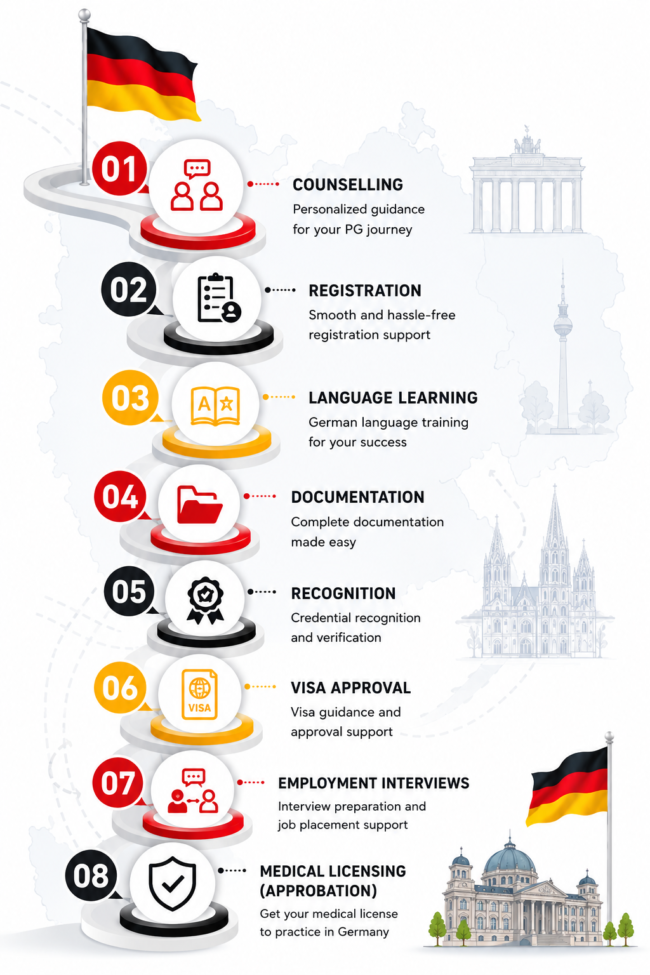
MissionGermany, The Education Network assists you with the entire step-by-step process for Medical PG in Germany after MBBS in India, personalized according to your individual requirements. Right from counselling, registration, language learning, documentation, recognition, visa approval, employment interviews, to medical licensing (Approbation) for continued Medical PG training in Germany.

We also offer a comprehensive range of integrated services to doctors from India with work opportunities in medical setups in Germany. Our support extends beyond Medical PG in Germany after MBBS in India along with guidance for permanent settlement in Germany.

Our qualified team of experts and doctors, both in India and Germany, work relentlessly to ensure a positive outcome in every single case. Our successful experiences give us the confidence to follow a proven repeatable process through which we take result-oriented action to secure employment followed by Medical PG in Germany after MBBS in India. We open the doors for you to make this journey pleasant and smooth through medical post-graduation in Germany.

01
Counselling
02
Registration
03
Language Learning
04
Documentation
05
Recognition
06
Visa Approval
07
Employment Interviews
08
Medical Licensing
(Approbation)
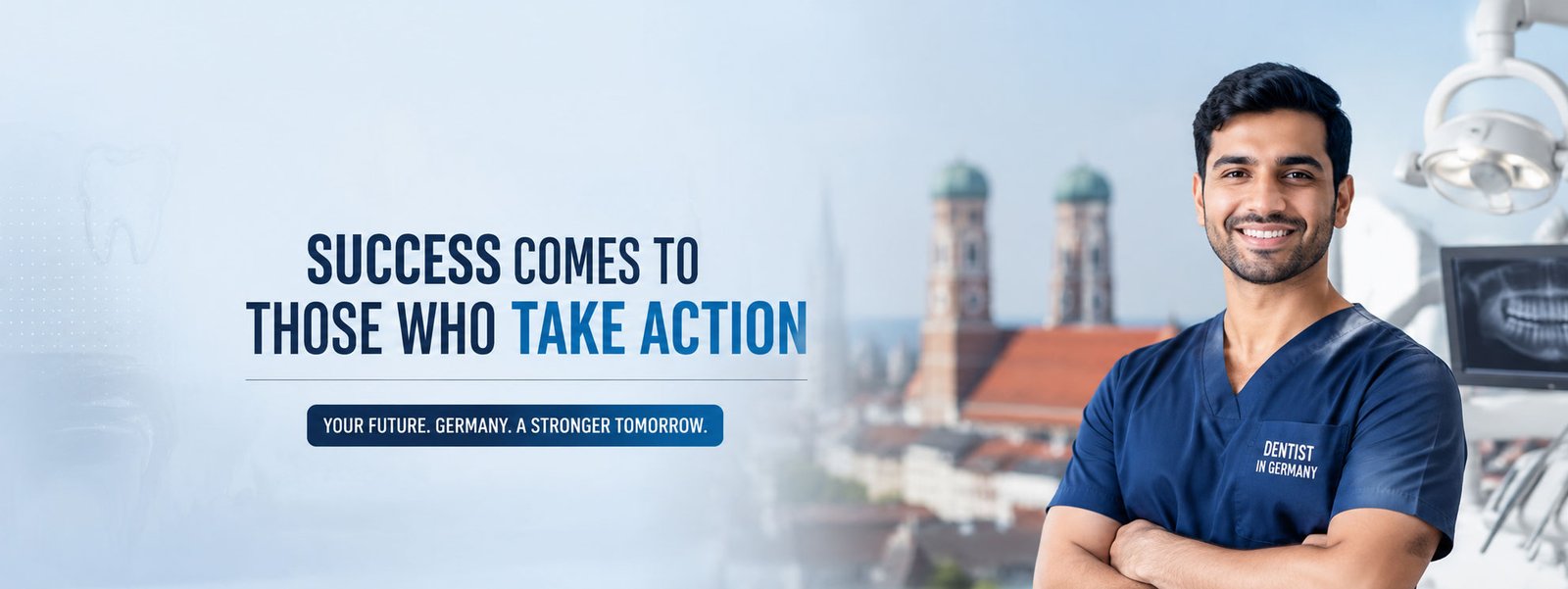
YOUR FUTURE STARTS HERE

SUCCESS COMES TO THOSE WHO TAKE ACTION

🇩🇪 Why Germany?

One Destination. Endless Dental Opportunities.

Discover why Germany has become one of the world's preferred destinations for Indian dentists

Germany Healthcare

Why Germany Needs International Dentists?

Germany is currently facing a growing shortage of dental professionals in both urban and rural areas. Several key factors are driving this demand:

  • An ageing population with increasing dental care needs
  • Retirement of a large number of practicing dentists
  • Uneven distribution of dentists between cities and rural regions
  • Rising demand for advanced dental treatments such as implants and aesthetic dentistry

As a result, Germany has become one of the most attractive destinations for international doctors seeking postgraduate training and long-term career opportunities.

Residency Benefits

Why Choose Germany
For Dental Career & Training?

Germany offers excellent opportunities for foreign-trained dentists, including:

  • Structured and internationally recognized specialist training.
  • Salaried positions in clinics and hospitals (approx. €3,500 – €4,500/month for beginners, increasing with experience)
  • No tuition fees for most clinical training positions as dental specialization is considered a Job.
  • Advanced healthcare system with modern dental technology
  • Excellent work-life balance and quality of life with Five days working/ 40 hrs a week.
  • Extra duties are rewarded with extra payment.
  • Social Security, Health Insurance, and Pension.
  • Flexibility of changing your choice of specialization during specialization training.
  • Opportunity for permanent residency and long-term settlement

High Demand

Germany continues to experience a shortage of healthcare professionals.

€4,800 – €5,500

Beginner monthly salary during residency training.

Zero Tuition

Medical specialization is considered a Job.

21 Months

Permanent Residency pathway after eligibility.

Germany's Healthcare System Depends on International Talent

0

Dentists currently practicing in Germany

0%

Dentists with international training/background Growing demand for foreign-trained dentists due to workforce needs

Foreign Dentists In Germany

The number of foreign-trained dentists in Germany has steadily increased over the past decade.

According to data from German professional dental and medical associations, Germany relies increasingly on international dental professionals to support its healthcare system.

  • A significant number of dentists come from non-EU countries, including India, Syria, Egypt, and other nations
  • Foreign dentists contribute to both public clinics and private practices
  • Their role is especially important in regions facing dentist shortages

Germany’s dental system is becoming more dependent on international professionals, making it a welcoming destination for career-oriented dentists worldwide.

Fachsprachprüfung (FSP)

The Fachsprachprüfung (FSP) is a Dental German language exam required for foreign dentists to get

  • Berufserlaubnis (Temporary German dental license): Permission to work as a dentist in Germany.
  • This exam ensures that dentists can communicate safely and effectively in a clinical environment. It does not test dental knowledge, but focuses only on professional German communication skills.
Doctor patient communication

What Is The Pattern Of Fachsprachprüfung (FSP) Exam?

The exam usually has 3 parts:

1. Dentist–Patient Conversation (Anamnese) 20 Mins

  • You talk to a simulated patient
  • Take dental history (pain, caries, bleeding gums, etc.)
  • Explain symptoms and ask questions clearly

2. Dental Documentation (20 mins)

  • You write a dentist report.
  • Summarize :
  • Findings
  • Diagnosis
  • Treatment plan

3.Dentist–Dentist Communication (20 mins)

  • Present the case to another dentist
  • Explain :
  • Diagnosis
  • Treatment approach
  • Clinical reasoning

Cost of The Fachsprachprüfung (FSP) Exam

The exam fees vary depending on the German federal state (Bundesland) and responsible authority.

Approximate Cost
€300 – €600

Example range

€350 – €420 in some states (e.g., Berlin region)

Up to €500 – €600 in other states (e.g., Bavaria)

The exact fee is set by the local medical/dental chamber and may change periodically.

Exam Authority & Location For Fachsprachprüfung (FSP) Exam

  • Conducted by State Dental Chambers (Zahnärztekammer) or licensing authorities

  • Candidates cannot choose the exam centre freely

  • The exam location depends on the state where the Approbation is applied for.

Waiting Time

  • Average waiting period : 2 to 8 weeks
  • May vary depending on state workload and document verification process

Difficulty In Fachsprachprüfung (Fsp) Exam

  • Dentist who learns German only in their home country often struggle with local accents and hospital communication.

  • Dentist who learns German in Germany usually have a much higher success rate (over 90%).

A specialized Dental German course can greatly improve chances of passing.

Who Is Eligible To Take Fachsprachprüfung (Fsp) Exam?

The dentist

  • Who has completed a B2/C1 level of the German language.
  • Have a valid Dental degree.
  • Has a job contract /Einstellenzusage/Interest Letter from a clinic in that state.

Then he/she can take this exam. This exam is taken by the respective state Dental council of Germany where the Dentist has the job contract and wants to practice after completion of all formalities.

What is a Fachsprachkurs / C1 Zahnmedizin? Preparation For The Specialist Language Exam For Dentist

This program focuses on improving specialist German for dental practice and communication in clinical settings.

01

Expansion of Dental Vocabulary

  • Advanced dental and medical terminology.
  • Clinical expressions used in dentistry.
  • Understanding complex specialist language in daily practice.
Dental vocabulary
02

Patient Communication Skills

  • Detailed patient history taking (Anamnese).
  • Explaining dental diagnoses and treatment plans
  • Conducting professional patient consultations
  • Communicating with relatives in difficult situations
Patient communication
03

Clinical Documentation

  • Writing dental reports and findings.
  • Preparing referral letters and dental documents
  • Structuring professional doctor/dentist letters in German
04

Communication in Clinical Situations

  • Handling patient concerns and complaints
  • Managing conflict situations professionally
  • Delivering negative or sensitive information clearly and empathetically
05

Grammar & Language Development

  • Advanced use of participle constructions
  • Expansion of nominalization and verbalization in medical German
  • Improving fluency in professional sentence structures
German learning
Learning Objectives

Learning Objectives Of Fachsprachprüfung (FSP) Exam

After completing the training, participants will be able to:

Understand both general and specialized dental conversations, even when complex language is used
Actively participate in professional dental discussions and case presentations
Communicate confidently and effectively with patients, relatives, and dental teams
Handle daily clinical communication in a German dental practice without difficulty

Contents

  • Deepening and expansion of vocabulary from the field of human medicine
  • Colloquial expressions for body parts and diseases (in-depth)
  • Deepening of medical communication in the areas of anamnesis, formulation of findings, preparation of doctor's letters, conducting an informational interview
  • Communication with relatives, communication of negative messages
  • Linguistically confidently master conflict situations
  • Extension of the participial constructions
  • Extension of nominalization / verbalization

Goal

  • Be able to understand general and subject-related conversation, even if more complex language is used.
  • Be able to actively participate in specialist discussions in their own specialist area.
  • Can communicate with patients and relatives without any problems.

Berufserlaubnis & Approbation

What is Berufserlaubnis?

The Berufserlaubnis is a limited permission (2 Year) to work as a dentist in Germany while your full license (Approbation) is still under process.This is acquired after passing the Fachsprachprüfung (FSP) exam.

It allows foreign-trained professionals to :

  • Work under supervision
  • Gain clinical experience in Germany
  • Start working earlier without waiting for full recognition

What is Approbation?

Approbation is the permanent dental license (zahnärztliche Approbation) which is acquired after Kenntnisprüfung (KP) or qualification analysis Gleichwertigkeit) that allows dentists to :

  • Work independently as a dentist in Germany.
  • Start specialist training in dentistry.
  • Open or work in a dental practice.
  • Use the professional title "Zahnarzt/Zahnärztin".

Become the Next Successful Dentist in Germany

Germany offers exciting opportunities for internationally qualified dentists. Let our experts guide you through eligibility, German language preparation, licensing, admissions, and every step toward a rewarding Dental PG career.

What Is Kenntnisprufung (KP)- Knowledge Test For Dentists

The Kenntnisprüfung (KP) is dental knowledge exam required for foreign-trained dentists (including non-EU graduates) if their degree is not considered fully equivalent to the German dental qualification. It is the final clinical exam step before obtaining the Approbation (German dental license).

What Is The Purpose Of Kenntnisprufung (KP)- Knowledge Test For Dentists

The KENNTNISPRÜFUNG (KP) checks whether a dentist has:

  • Equivalent clinical knowledge to German dental graduates
  • Ability to plan and manage treatments safely
  • Understanding of German clinical guidelines (Leitlinien)
  • Competence in patient safety and decision-making

In the field of internal medicine or surgery, this takes place in a hospital. Under the supervision of a member of the examination board, you examine the patient assigned to you and collect the medical history. Finally, you prepare a report on the patient, which is also the subject of the theoretical examination.

This is followed by an oral-practical session, often held in small groups, in which the examiners ask in-depth questions based on clinical cases. The focus lies on internal medicine and surgery, but may also cover areas such as emergency medicine, pharmacology, and infectious diseases. This part usually lasts 60–90 minutes per candidate.

What Is The Exam Structure For Kenntnisprufung (KP) Knowledge Test For Dentists

The Knowledge Test is a clinical-practical exam, usually conducted orally and case-based.

Main Components:

You are given real patient cases and must:
  • Take dental history
  • Identify diagnosis
  • Suggest treatment plan
  • Explain step-by-step clinical approach

According to German regulations, the exam includes:
  • Dental Prosthetics (Prothetik)
  • Orthodontics (Kieferorthopädie)
  • Oral Surgery (Oralchirurgie)
  • Maxillofacial Surgery (MKG)
  • Conservative Dentistry (Zahnerhaltung) including:
    • Endodontics
    • Periodontology
    • Pediatric Dentistry
    • Restorative Dentistry

Candidates may also be asked about:
  • Dental emergencies
  • Pharmacology and medication use
  • Infection control and hygiene
  • Legal aspects of dental practice in Germany

Cost Of Kenntnisprufung (KP) Knowledge Test For Dentists

For participation in the knowledge test, costs of approx. 1300 euros (120 euros for the written exam, 510 euros for the oral exam and 510 euros for the practical exam. In addition, approx. 150 euros for material costs).

Total approx.€1,300
Written examapprox. €120
Oral exam€510
Practical exam + materials€510 + €150

What If You Fail In Kenntnisprufung (KP)/ Knowledge Test?

The knowledge test can only be repeated twice. Between the exams, a temporary license can be issued with restrictions for a maximum of 1 year if the examination board has determined that working as a dentist is possible without affecting the health of the patient.

Some Happy Smiles

🇩🇪 Dental PG in Germany

Ready to Start Your Dentist Residency Journey in Germany?

Receive personalized guidance from eligibility assessment to Approbation licensing, German language training, hospital placements, visa support, and residency admission.

Free Eligibility Assessment
Language Training Support
Hospital Placement Assistance
End-to-End Approbation Guidance
100+

Dentist Guided

16 States

We work across Germany

Dentist led team

Experienced Medical Professionals

Dental Approbation Guide

Which German Federal State Is Best for the Dental Approbation?

It’s not about “Berlin or Munich” — it depends on which stage you are in and which challenge is most important for you.

We compare all 16 federal states of Germany for our doctors based on key factors:

Pass/fail rates from the latest medical chamber reports
Total Approbation processing time
FSP and KP Exam Appointment
Rules for issuing Berufserlaubnis (temporary license)
Frequency of Hearings (Anhörung / Defizitbescheid).
Policies for non-EU doctors
State-level funding and support programs
Salaries under TV-Ärzte contracts
Cost of living and rent in each state capital
FSP and Kenntnisprüfung fees
This comparison is based on official sources, including:
  • State Medical Chambers (Ärztekammern)
  • Bundesärztekammer statistics
  • Regional authorities such as BLÄK, LÄK Baden-Württemberg, ZAABY, Bezirksregierung Münster, LSJV, and official chamber activity reports
Medical Illustration

Masters Of Dental Science (M.D.S.)

A general dentist in Germany performs:
  • Fillings and restorations
  • Root canal treatments
  • Extractions
  • Crowns and bridges
  • Basic prosthetic and preventive treatments

  • Official dental specialty in Germany
  • Focuses on:
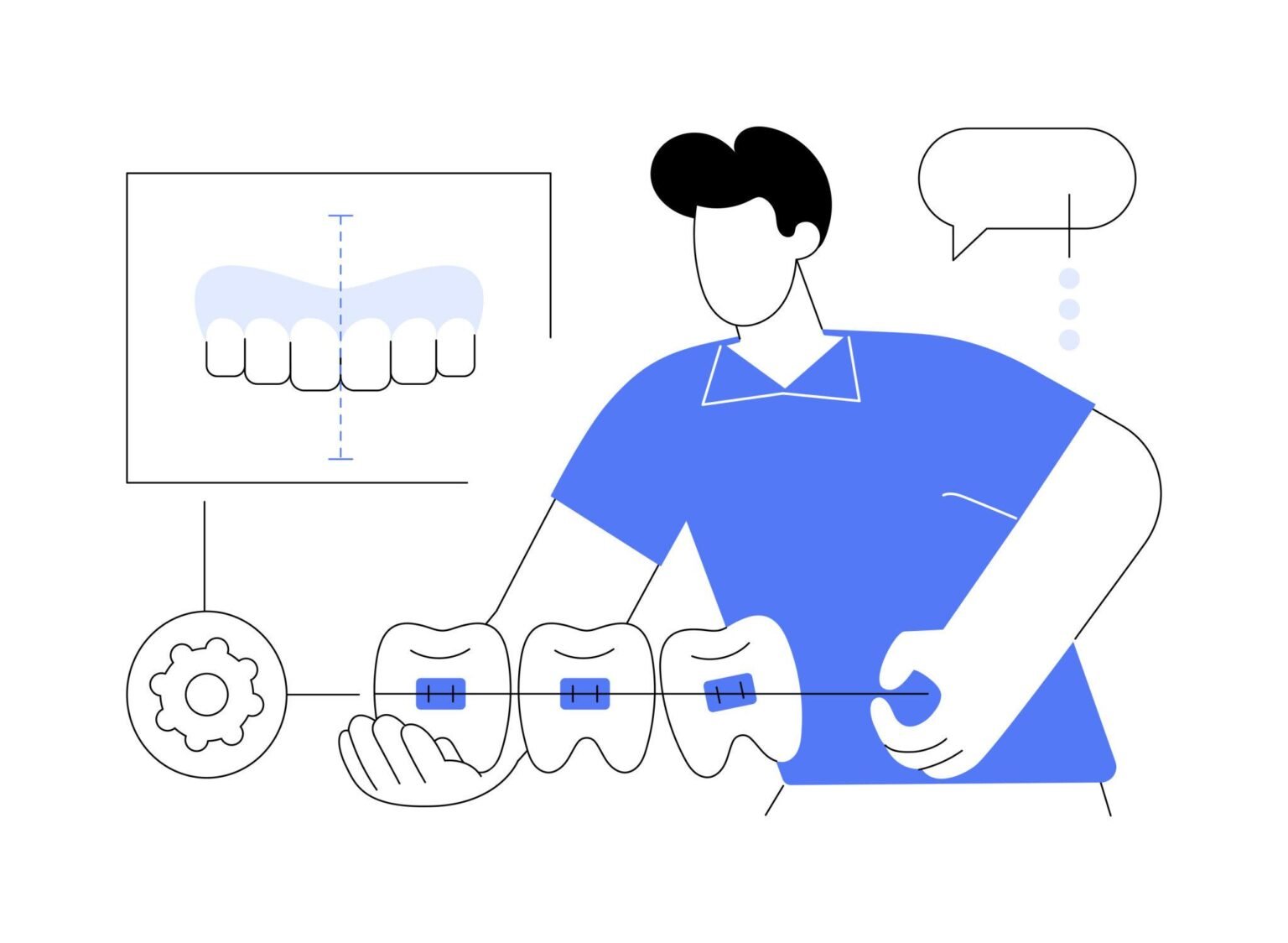
    • Braces
    • Aligners
    • Jaw and tooth alignment

Duration: Approximately 3 years of structured training after Approbation

  • Recognized specialist field
  • Focuses on:
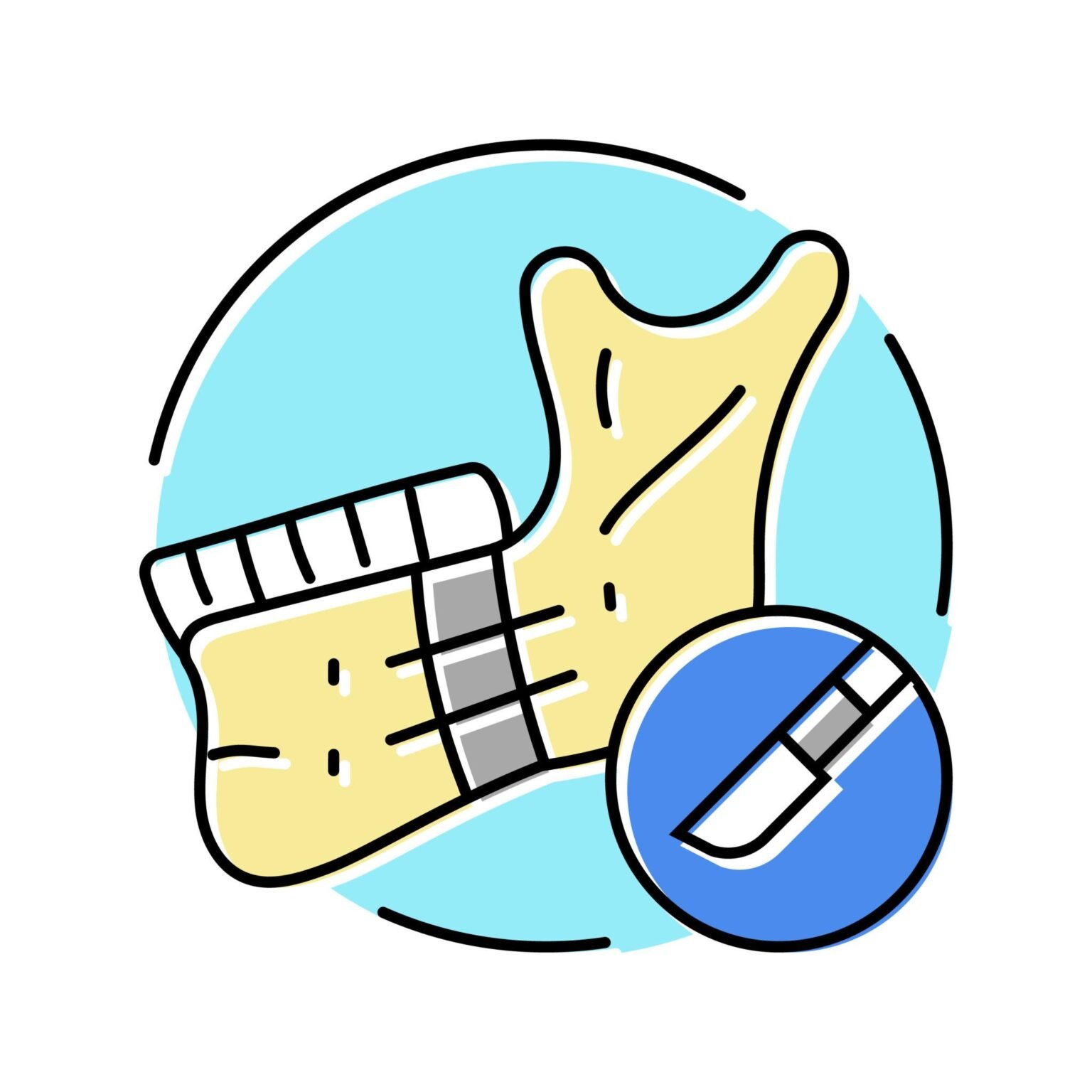
    • Wisdom tooth removal
    • Minor oral surgical procedures
    • Dental implants
    • Cysts and oral pathologies

Duration : Around 3–4 years of specialist training after Approbation

Highest surgical specialization in dentistry

  • Requires both:
    • Dentistry degree
    • Medical degree
  • Focuses on complex facial, jaw, and reconstructive surgeries

Germany does not offer a formal “Prosthodontics (MDS-style)” specialty.

Instead, dentists can specialize through:

Clinical Experience:
  • Crowns and bridges
  • Dentures
  • Implant dentistry
  • Cosmetic and aesthetic treatments
  • Master of Science (M.Sc.) in Dentistry
    • Implantology
    • Prosthodontics
    • Aesthetic Dentistry
    • Periodontology

These are academic qualifications, not official specialist titles

  • Mostly practiced as part of general dentistry
  • Advanced skills can be developed through:
    • Clinical experience
    • M.Sc. programs

Types Of Dental Clinics Germany?

In Germany, dental care is offered through different clinic/practice models, and as a foreign dentist it’s important to understand the structure because the work environment, ownership, training opportunities, salary model, and patient flow can be very different.

A. Private Practice Sector

Solo Clinic (Einzelpraxis)

This is the classic single-owner dental clinic run by one dentist, though it may still employ associate dentists and assistants.

Group Practice (Gemeinschaftspraxis / BAG)

This is a shared private practice run by 2 or more dentists who work together under one structure. They usually share staff, equipment, and patients.

Shared Practice (Praxisgemeinschaft)

This is different from a true group practice. Here, dentists share rooms, reception, or equipment, but each dentist may still run their own independent practice and patient list.

B. Organized Outpatient Centre Sector

zMVZ / Dental Care Centres

It is a dentist-led outpatient centre where at least two dentists work together, often as employees or contracted dentists.

Dental chains / corporate dental groups

Some dental clinics in Germany are run as chains, often through the zMVZ model.

C. Academic / Hospital Sector

University Dental Clinics

These are attached to German universities and are important for:

  • Specialist training
  • Academic dentistry
  • Complex referrals
  • Research and Teaching

Hospital oral surgery / OMFS departments

Not every hospital has a full dental clinic, but larger hospitals or university hospitals may have

What a Foreign Dentist Can Do After Approbation in Germany?

Dental PG in Germany can completely transform a foreign dentist’s career — not just by giving a degree, but by opening doors to clinical practice, specialization, academics, and even private practice ownership in Germany.

For many dentists, Germany is not just a place to study. It can become a place to build an entire career, income, identity, and future.

01
Licensed Dentist

Work as a licensed dentist in private clinics, dental centres, or group practices.

02
Specialized Fields

Work in Orthodontics, Oral Surgery, Implantology, Esthetic Dentistry, depending on your training and recognition.

03
Higher Specialist Training

Continue higher specialist dental training and build an advanced career in Germany.

04
Hospital Career

Work in hospital-based dental departments or oral and maxillofacial surgery units.

05
Teaching & Research

Move into teaching, academics, research, and university-level dental education.

06
Own Dental Practice

Eventually open, buy, or partner in your own dental practice in Germany.

Indian Dental Specialization vs Dental PG in Germany

German vs Indian medical PG
Comparison
Indian Dental Specialization
Dental PG in Germany
Exam System
Competitive MCQ based Entrance Exam
German Language Practical Qualifying Exams
Financials
You Pay Fee
You Get Salary
Choice of Stream
Based on Your Merit in NEET MDS
Your Choice
Experience
PG Period Counted as Study time
PG years Counted as Experience
Settlement
Struggling with hardly any stipend during PG
Settled job with Salary before the Start of PG

Is NEET MDS a Realistic Approach to Reaching Your Goals?

Thousands of talented dentists dedicate years preparing for Dental PG specialization.

Out of every 100 hardworking dentists , only 3 may get a government seat.
The other 97 are left to struggle with uncertainty, private college fees, loans, pressure, and shattered hopes.

This is not just competition.
This is a system where thousands of deserving dentists fight for a future that only a handful can afford to reach.

1 in 25 to 1 in 30.
That’s not just a statistic.
That’s the reality of MDS in India.
That’s the pain behind every rank, every counselling round, and every dream
that doesn’t make it.

0%

Every aspiring dentist begins with the same dream.

Every year, thousands of hardworking dentists dedicate months or even years preparing for NEET MDS, hoping to secure a postgraduate seat and build a successful career.

0%

Most dentists never secure a Government MDS seat.

Out of every 100 hardworking dentists, only about 3 may secure a Government MDS seat. The remaining 97 face uncertainty, repeated attempts, expensive private colleges, education loans, or abandoning their dream of specialization.

0%

Only a small percentage achieve their preferred specialization.

The remaining 9% who get the top ranks still cannot pick their specialization.

NEET MDS Reality

1 in 25 to 1 in 30. That isn't just another statistic.

It represents the harsh reality of pursuing MDS in India—where thousands of deserving dentists compete for a limited number of seats, while many are left dealing with uncertainty, financial pressure, counselling rounds, and postponed dreams.

3%

Government MDS Seats

97%

Dentists Without a Government Seat

Advantages of Dental PG in Germany After BDS In India

No Competitive Examination

Germany has qualified German language exams and a Practical Exams, with a high % of success rate, unlike the USA where the Indian BDS degree is itself not fully recognized.

Need for Health Care Practitioners

Dentists are in high demand in Germany, unlike the USA and UK. Owing to its strong economy and growing demand for dental care professionals, Germany has plentiful opportunities for PG students to get hired after completing their training.

Guaranteed Settlement

Dentists working in Germany are eligible for a Blue Card. They can apply for a Permanent Residency in 21 months and a German citizenship in 6 years.

Internationally Recognized Degrees

Dental Specialization Degrees acquired in Germany have international recognition, offering universal prospects for employment and higher studies.

Regulated Residency Programs

Germany ensures an all-inclusive and uniform training experience through its well-structured residency programs, offering well-defined pathways for specialization.

Research Opportunities

Germany boasts of state-of-the-art dental research, ensuring PG students with cutting-edge research projects and alliances with leading industry experts.

To summarize, pursuing a Dental PG in Germany vis-à-vis the USA and UK provides a combination of fine-quality training, lower cost of living, and varied opportunities that make it a convincing choice for international dentists.

"While the journey seems long and hard at the beginning, with perseverance and dedication the rewards at the end last a lifetime." — William R. Francis

Some Happy Smiles

MissionGermany

Still Preparing for NEET MDS?
Discover a Smarter Path to Dental PG in Germany

Thousands of aspiring dentists spend years preparing for NEET MDS with limited seats and intense competition. Germany offers an internationally respected Dental PG pathway with advanced clinical exposure, modern hospitals, and excellent career opportunities.

Is NEET MDS a Realistic Approach to Reaching Your Goals?

Thousands of talented dentists dedicate years preparing for Dental PG specialization.

0%

Every aspiring dentist begins with the same dream.

Every year, thousands of hardworking dentists dedicate months or even years preparing for NEET MDS, hoping to secure a postgraduate seat and build a successful career.

0%

Most dentists never secure a Government MDS seat.

Out of every 100 hardworking dentists, only about 3 may secure a Government MDS seat. The remaining 97 face uncertainty, repeated attempts, expensive private colleges, education loans, or abandoning their dream of specialization.

0%

Only a small percentage achieve their preferred specialization.

The remaining 9% who get the top ranks still cannot pick their specialization.

The Reality

1 in 25 to 1 in 30. That isn't just another statistic.

It represents the harsh reality of pursuing MDS in India—where thousands of deserving dentists compete for a limited number of seats, while many are left dealing with uncertainty, financial pressure, counselling rounds, and postponed dreams.

3%

Government MDS Seats

97%

Dentists Without a Government Seat

"While the journey seems long and hard at the beginning, with perseverance and dedication the rewards at the end last a lifetime."

— William R. Francis

Is An Indian (Or Other Non-Eu) Dental Degree Valid In Germany?

A non-EU dental degree, including an Indian BDS, is not automatically valid in Germany, but it can be recognised. The authority compares your training to the German curriculum; if it is equivalent, you proceed directly, and if not, you take the Kenntnisprüfung(KP) to prove equivalent knowledge. In both cases you also need German language proof and the Fachsprachprüfung before the Approbation is granted.

  • Recognition of Degree
  • German Language
  • Fachsprachprüfung (FSP)
  • Approbation (Kenntnisprufung)
1
Recognition of Degree
2
German Language
3
Fachsprachprüfung (FSP)
4
Approbation (KP)


CALL TO LEARN MORE


GET IN TOUCH


ARE YOU READY FOR THIS OFFER

50% Offer For Very First 50

Student’s & Mentors
img img img
Ready to Begin?

Make Your Mission Possible with MissionGermany

Get personalized guidance from our experts on eligibility, German language preparation, licensing, admissions, and visa support. Start your Dental PG journey in Germany with confidence.

Career of Indian Dentists in Germany

Why Dental Pg In Germany Is An Achievable Option For Indian Dentists?

Medical PG Germany
STEP

01

01

Dental Specialization Journey

India vs Germany

The prerequisites of becoming a specialist dentist in India is not just expensive but ungratifying with the odds of succeeding are particularly scarce. This is why many opt for PG in Germany after BDS in India, as the systems in India and Germany are poles apart.

In India, you earn your Dental license after completing your dental studies with a compulsory internship. This does not necessarily assure you a seat for dental specialization. You must go through very competitive MCQ-based exams of NEET-MDS to be a specialist in India. Only the top few percentiles of the aspirants get to become a specialist in India.

India
  • Competitive Entrance
  • Limited Seats
  • High Competition
Germany
  • Career Opportunity
  • Structured Pathway
  • Residency Training
02

German Dental Licensing Pathway

Your Route to Dental Specialization

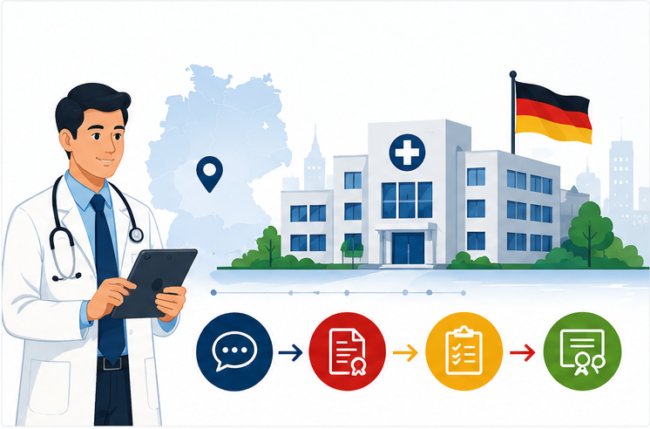
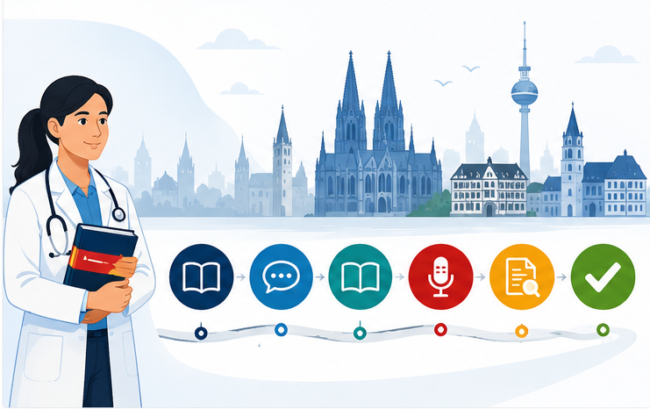
Unlike India, dentists in Germany are entitled to start their specialization with no competitive MCQ-based subject exams like NEET MDS in India but can directly start specialization after getting Permanent Medical Licensing called “Approbation”. The only prerequisite is getting a temporary license (Berufserlaubnis). This is acquired by qualifying the German language and Dental German language examinations Fachsprachprüfung – FSP. After passing Fachsprachprüfung – FSP the dentist can apply for a knowledge test- Kenntnisprüfung (KP), and after passing Kenntnisprüfung (KP) the dentist gets permanent license (Approbation), to begin a fully-paid specialization training of his choice.
01
German Language
02
FSP
03
KP
04
Approbation
Germany Medical Licensing
STEP

02

German Language Journey
STEP

03

03

German Language & Dental Licensing Journey

From B1 German to Approbation

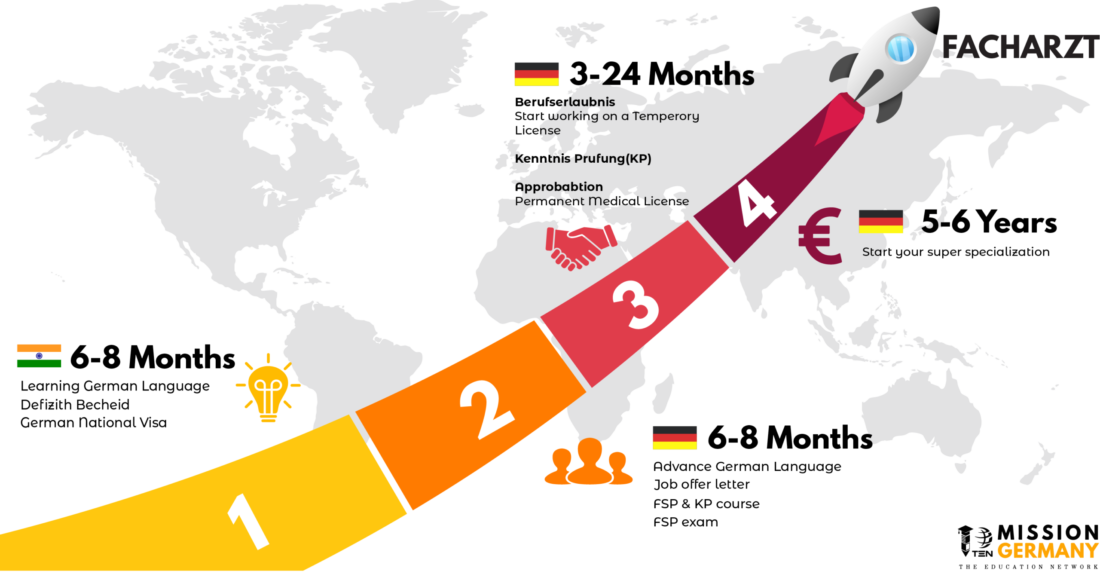
The journey for Dental PG in Germany for Indian dental practitioners can begin with mastering the basic and intermediate level of German Language to the level of B1 in India followed by advanced level of German Language B2- C1 in Germany continued with C1 -Medizin Kurs. Once you clear the verbal qualifying assessment exams of Fachsprachenprüfung (FSP), you begin working on a temporary license with a salary. After qualifying Kenntnisprüfung (KP), you are granted a permanent dental license called Approbation so that you start your specialization— as a dental practitioner in Germany.

B1
India
B2
Germany
C1
Medizin
FSP
Exam
KP
Exam
Approbation
04

MissionGermany Dental PG Support

Complete Guidance from India to Germany

MissionGermany, The Education Network thoroughly evaluates your academic records and handles the complete documentation process to support your application for dental licensing in Germany, setting you on a direct path to dental post-graduation in Germany.

After receiving the necessary approvals (Defizitbescheid/Anhörung) from a specific State Medical Council, you travel to Germany to continue your advanced German language training and prepare for the dental German language courses, which are vital for Dental PG in Germany after BDS in India.

Mission Germany Support
STEP

04

🇩🇪 Why Germany?

One Destination. Endless Dental Opportunities.

Discover why Germany has become one of the world's preferred destinations for Indian dentists

Germany Healthcare

Why Germany Needs International Dentists?

Germany is currently facing a growing shortage of dental professionals in both urban and rural areas. Several key factors are driving this demand:

  • An ageing population with increasing dental care needs
  • Retirement of a large number of practicing dentists
  • Uneven distribution of dentists between cities and rural regions
  • Rising demand for advanced dental treatments such as implants and aesthetic dentistry

As a result, Germany has become one of the most attractive destinations for international doctors seeking postgraduate training and long-term career opportunities.

Residency Benefits

Why Choose Germany
For Dental Career & Training?

Germany offers excellent opportunities for foreign-trained dentists, including:

  • Structured and internationally recognized specialist training.
  • Salaried positions in clinics and hospitals (approx. €3,500 – €4,500/month for beginners, increasing with experience)
  • No tuition fees for most clinical training positions as dental specialization is considered a Job.
  • Advanced healthcare system with modern dental technology
  • Excellent work-life balance and quality of life with Five days working/ 40 hrs a week.
  • Extra duties are rewarded with extra payment.
  • Social Security, Health Insurance, and Pension.
  • Flexibility of changing your choice of specialization during specialization training.
  • Opportunity for permanent residency and long-term settlement

High Demand

Germany continues to experience a shortage of healthcare professionals.

€4,800 – €5,500

Beginner monthly salary during residency training.

Zero Tuition

Medical specialization is considered a Job.

21 Months

Permanent Residency pathway after eligibility.

Germany provides a stable and secure career path for dentists who complete the licensing process.

Become the Next Successful Dentist in Germany

Germany offers exciting opportunities for internationally qualified dentists. Let our experts guide you through eligibility, German language preparation, licensing, admissions, and every step toward a rewarding Dental PG career.

Types Of Dental Clinics Germany?

In Germany, dental care is offered through different clinic/practice models, and as a foreign dentist it’s important to understand the structure because the work environment, ownership, training opportunities, salary model, and patient flow can be very different.

A. Private Practice Sector

Solo Clinic (Einzelpraxis)

This is the classic single-owner dental clinic run by one dentist, though it may still employ associate dentists and assistants.

Group Practice (Gemeinschaftspraxis / BAG)

This is a shared private practice run by two or more dentists who work together under one structure. They usually share staff, equipment, and patients.

Shared Practice (Praxisgemeinschaft)

Dentists share rooms, reception, or equipment, but each dentist maintains an independent practice and patient list.

B. Organized Outpatient Centre Sector

zMVZ / Dental Care Centres

A dentist-led outpatient centre where at least two dentists work together, often as employees or contracted dentists.

Dental Chains / Corporate Dental Groups

Some dental clinics in Germany are operated as chains, often through the zMVZ model.

C. Academic / Hospital Sector

University Dental Clinics

These are attached to German universities and are important for:

  • Specialist training
  • Academic dentistry
  • Complex referrals
  • Research and teaching

Hospital Oral Surgery / OMFS Departments

Not every hospital has a full dental clinic, but larger hospitals and university hospitals may have dedicated Oral & Maxillofacial Surgery (OMFS) departments.

Requirements To Start Dental Residency In Germany (Zahnarzt Weiterbildung)

International dentists generally need :

1

Recognition of their dental degree.

2

German language proficiency (usually B2 level).

3

Passing the dental language examination (Fachsprachprüfung – FSP).

4

Obtaining the German Dental License – Approbation (Kenntnisprüfung).

5

Securing a residency position in a hospital or clinic.

Need Expert Guidance?

Not Sure If You Meet the Requirements?

Our Germany Dental PG experts will review your profile, explain the eligibility criteria, and provide a personalized roadmap for your residency journey.

16 Federal States, Compared

Which German Federal State Is Best For The Dental Approbation?

It's not about "Berlin or Munich" — it depends on which stage you are in and which challenge is most important for you.

We compare all 16 federal states of Germany for our Dentist based on key factors such as:

High Chances of Employment Pass/fail rates from the latest medical chamber reports Total Approbation processing time Waiting time for KP exam appointments Rules for issuing Berufserlaubnis (temporary license) Frequency of Hearings (Anhörung / Defizitsbescheid) Policies for non-EU doctors State-level funding and support programs Salaries under TV-Zahnärzte contracts Cost of living and rent in each state capital FSP and Kenntnisprüfung fees

This comparison is based on official sources, including :

State Dental Chambers (Zahnärztekammern)
Bundeszahnärztekammer statistics
Regional authorities such as BLÄK, LÄK Baden-Württemberg, ZAABY, Bezirksregierung Münster, LSJV, and official chamber activity reports

Fachsprachprüfung (FSP)

The Fachsprachprüfung (FSP) is a Dental German language exam required for foreign dentists to get

  • Berufserlaubnis (Temporary German dental license): Permission to work as a dentist in Germany.
  • This exam ensures that dentists can communicate safely and effectively in a clinical environment. It does not test dental knowledge, but focuses only on professional German communication skills.
Doctor patient communication

What Is The Pattern Of Fachsprachprüfung (FSP) Exam?

The exam usually has 3 parts:

1. Dentist–Patient Conversation (Anamnese) 20 Mins

  • You talk to a simulated patient
  • Take dental history (pain, caries, bleeding gums, etc.)
  • Explain symptoms and ask questions clearly

2. Dental Documentation (20 mins)

  • You write a dentist report.
  • Summarize :
  • Findings
  • Diagnosis
  • Treatment plan

3.Dentist–Dentist Communication (20 mins)

  • Present the case to another dentist
  • Explain :
  • Diagnosis
  • Treatment approach
  • Clinical reasoning

Cost of The Fachsprachprüfung (FSP) Exam

The exam fees vary depending on the German federal state (Bundesland) and responsible authority.

Approximate cost
€300 – €600

Example range

€350 – €420 in some states (e.g., Berlin region)

Up to €500 – €600 in other states (e.g., Bavaria)

The exact fee is set by the local medical/dental chamber and may change periodically.

Exam Authority & Location For Fachsprachprüfung (FSP) Exam

  • Conducted by State Dental Chambers (Zahnärztekammer) or licensing authorities

  • Candidates cannot choose the exam centre freely

  • The exam location depends on the state where the Approbation is applied for.

Waiting Time

  • Average waiting period : 2 to 8 weeks
  • May vary depending on state workload and document verification process

Difficulty In Fachsprachprüfung (Fsp) Exam

  • Dentist who learns German only in their home country often struggle with local accents and hospital communication.

  • Dentist who learns German in Germany usually have a much higher success rate (over 90%).

A specialized Dental German course can greatly improve chances of passing.

Who Is Eligible To Take Fachsprachprüfung (Fsp) Exam?

The dentist

  • Who has completed a B2/C1 level of the German language.
  • Have a valid Dental degree.
  • Has a job contract /Einstellenzusage/Interest Letter from a clinic in that state.

Then he/she can take this exam. This exam is taken by the respective state Dental council of Germany where the Dentist has the job contract and wants to practice after completion of all formalities.

What is a Fachsprachkurs / C1 Zahnmedizin? Preparation For The Specialist Language Exam For Dentist

This program focuses on improving specialist German for dental practice and communication in clinical settings.


01

Expansion of Dental Vocabulary

  • Advanced dental and medical terminology.
  • Clinical expressions used in dentistry.
  • Understanding complex specialist language in daily practice.
Dental vocabulary
02

Patient Communication Skills

  • Detailed patient history taking (Anamnese).
  • Explaining dental diagnoses and treatment plans
  • Conducting professional patient consultations
  • Communicating with relatives in difficult situations
Patient communication
03

Clinical Documentation

  • Writing dental reports and findings.
  • Preparing referral letters and dental documents
  • Structuring professional doctor/dentist letters in German
04

Communication in Clinical Situations

  • Handling patient concerns and complaints
  • Managing conflict situations professionally
  • Delivering negative or sensitive information clearly and empathetically
05

Grammar & Language Development

  • Advanced use of participle constructions
  • Expansion of nominalization and verbalization in medical German
  • Improving fluency in professional sentence structures
German learning
Learning Objectives

Learning Objectives Of Fachsprachprüfung (FSP) Exam

After completing the training, participants will be able to:

Join the FSP Program Request More Information
Understand both general and specialized dental conversations, even when complex language is used
Actively participate in professional dental discussions and case presentations
Communicate confidently and effectively with patients, relatives, and dental teams
Handle daily clinical communication in a German dental practice without difficulty

Contents

  • Deepening and expansion of vocabulary from the field of human medicine
  • Colloquial expressions for body parts and diseases (in-depth)
  • Deepening of medical communication in the areas of anamnesis, formulation of findings, preparation of doctor's letters, conducting an informational interview
  • Communication with relatives, communication of negative messages
  • Linguistically confidently master conflict situations
  • Extension of the participial constructions
  • Extension of nominalization / verbalization

Goal

  • Be able to understand general and subject-related conversation, even if more complex language is used.
  • Be able to actively participate in specialist discussions in their own specialist area.
  • Can communicate with patients and relatives without any problems.

Berufserlaubnis & Approbation

What is Berufserlaubnis?

The Berufserlaubnis is a limited permission (2 Year) to work as a dentist in Germany while your full license (Approbation) is still under process.This is acquired after passing the Fachsprachprüfung (FSP) exam.

It allows foreign-trained professionals to :

  • Work under supervision
  • Gain clinical experience in Germany
  • Start working earlier without waiting for full recognition

What is Approbation?

Approbation is the permanent dental license (zahnärztliche Approbation) which is acquired after Kenntnisprüfung (KP) or qualification analysis Gleichwertigkeit) that allows dentists to :

  • Work independently as a dentist in Germany.
  • Start specialist training in dentistry.
  • Open or work in a dental practice.
  • Use the professional title "Zahnarzt/Zahnärztin".

What Is Kenntnisprufung (KP)- Knowledge Test For Dentists

The Kenntnisprüfung (KP) is dental knowledge exam required for foreign-trained dentists (including non-EU graduates) if their degree is not considered fully equivalent to the German dental qualification. It is the final clinical exam step before obtaining the Approbation (German dental license).

What Is The Purpose Of Kenntnisprufung (KP)- Knowledge Test For Dentists

The KENNTNISPRÜFUNG (KP) checks whether a dentist has:

  • Equivalent clinical knowledge to German dental graduates
  • Ability to plan and manage treatments safely
  • Understanding of German clinical guidelines (Leitlinien)
  • Competence in patient safety and decision-making

In the field of internal medicine or surgery, this takes place in a hospital. Under the supervision of a member of the examination board, you examine the patient assigned to you and collect the medical history. Finally, you prepare a report on the patient, which is also the subject of the theoretical examination.

This is followed by an oral-practical session, often held in small groups, in which the examiners ask in-depth questions based on clinical cases. The focus lies on internal medicine and surgery, but may also cover areas such as emergency medicine, pharmacology, and infectious diseases. This part usually lasts 60–90 minutes per candidate.

What Is The Exam Structure For Kenntnisprufung (KP) Knowledge Test For Dentists

The Knowledge Test is a clinical-practical exam, usually conducted orally and case-based.

Main Components:

You are given real patient cases and must:
  • Take dental history
  • Identify diagnosis
  • Suggest treatment plan
  • Explain step-by-step clinical approach

According to German regulations, the exam includes:
  • Dental Prosthetics (Prothetik)
  • Orthodontics (Kieferorthopädie)
  • Oral Surgery (Oralchirurgie)
  • Maxillofacial Surgery (MKG)
  • Conservative Dentistry (Zahnerhaltung) including:
    • Endodontics
    • Periodontology
    • Pediatric Dentistry
    • Restorative Dentistry

Candidates may also be asked about:
  • Dental emergencies
  • Pharmacology and medication use
  • Infection control and hygiene
  • Legal aspects of dental practice in Germany

Cost Of Kenntnisprufung (KP) Knowledge Test For Dentists

For participation in the knowledge test, costs of approx. 1300 euros (120 euros for the written exam, 510 euros for the oral exam and 510 euros for the practical exam. In addition, approx. 150 euros for material costs).

Total approx.€1,300
Written examapprox. €120
Oral exam€510
Practical exam + materials€510 + €150

What If You Fail In Kenntnisprufung (KP)/ Knowledge Test?

The knowledge test can only be repeated twice. Between the exams, a temporary license can be issued with restrictions for a maximum of 1 year if the examination board has determined that working as a dentist is possible without affecting the health of the patient.

Make Your Mission Possible with MissionGermany

Your career, your choice — start your Medical PG in Germany journey today.

Get in Touch
🌍
Your Global Career Starts Here

Ready to Choose Germany for Your Dental PG?

Skip the uncertainty and explore a globally recognized pathway to Dental Residency in Germany. Get expert guidance on admissions, German language preparation, licensing, visa support, and career planning—all under one roof.

Book Consultancy